What the Class A entry covers
Part I of Schedule 2 to the Act lists the Class A drugs. Two entries matter here: "Psilocin" and the fungus entry added by the Drugs Act 2005. Further paragraphs extend the list to esters, salts and "any preparation or other product" containing a listed substance.
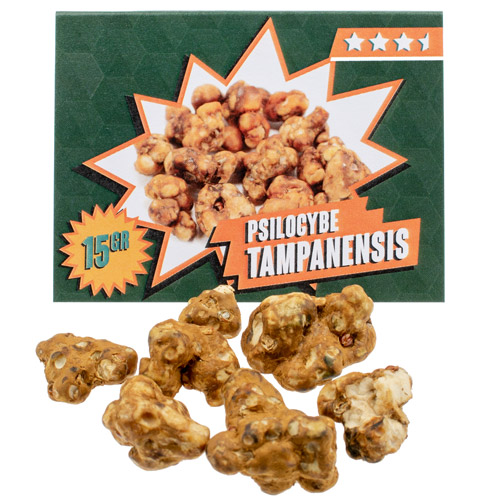
The fungus entry is written broadly. It does not name a species, a part of the fungus or a form. A liberty cap picked in a field, a Psilocybe cubensis grown in a tub and a truffle (the underground sclerotium of some species) all fall under it if they contain psilocin or psilocybin. Whether the material is fresh, dried, frozen, brewed or powdered no longer makes a difference.
The offences
The Act does not make taking a drug an offence. It makes the things around it offences: having it, passing it on, growing or making it, and moving it across the border.
| Conduct | Provision | Maximum on indictment |
|---|
| Possession | Section 5(2) | 7 years, an unlimited fine, or both |
| Possession with intent to supply | Section 5(3) | Life, an unlimited fine, or both |
| Supplying, offering to supply, or being concerned in supply | Section 4(3) | Life, an unlimited fine, or both |
| Producing, or being concerned in production | Section 4(2) | Life, an unlimited fine, or both |
| Allowing production or supply on premises you occupy or manage | Section 8 | 14 years, an unlimited fine, or both |
| Importing or exporting | Section 3 with the Customs and Excise Management Act 1979 | Life, an unlimited fine, or both |
The maximums come from Schedule 4 of the Act and match the summary on GOV.UK. A case kept in the magistrates' court has a lower ceiling. "Produce" is defined in section 37 as "producing it by manufacture, cultivation or any other method", so growing mushrooms is production. Supply includes giving away and sharing, with no money involved. Offering to supply is complete when the offer is made, even if there were never any mushrooms, according to the CPS legal guidance on drug offences.
When holding a mushroom is not possession
Because the 2005 entry made a growing mushroom a controlled drug, the government added exceptions on the same day, so that a farmer with liberty caps in a field does not commit an offence. Regulation 4A of the Misuse of Drugs Regulations 2001 switches off the possession offence where the fungus:
- is growing uncultivated;
- has been picked to be handed, as soon as reasonably practicable, to someone entitled to take it, and is held for that purpose;
- has been picked to be destroyed as soon as reasonably practicable, and is held for that purpose.
The Home Office explanatory memorandum adds that a landowner who intends to supply wild mushrooms commits possession with intent to supply. The exceptions also cover someone who changes their mind between destroying and handing in, and farm workers who pass picked mushrooms along. Picking to keep, dry, eat, give away or sell falls outside them.
Section 5(4) of the Act gives a separate defence to someone who took a drug from another person to stop an offence or to hand it in, and then took reasonable steps to destroy it or deliver it to someone lawfully entitled to it.
Not knowing what it was
Section 28 of the Act provides a defence where the accused neither believed nor suspected, nor had reason to suspect, that the substance was a controlled drug. The CPS guidance notes that the defendant only has to raise evidence of this; the prosecution then has to disprove it. In practice it is hard to run for someone who chose to pick, buy or eat mushrooms because of their effect.
Where the law applies
The whole of the United Kingdom. The 1971 Act extends to Northern Ireland (section 40), and the 2005 amendment carries the same extent as the Act it amends (Drugs Act 2005, section 24). The 2001 Regulations with regulation 4A cover England, Wales and Scotland. Northern Ireland added the same exceptions to its own Regulations with SR 2005/360, in operation from 8 August 2005.
What differs between the nations is enforcement and sentencing. The penalties page covers the Sentencing Council guidelines for England and Wales and the recorded police warnings available in Scotland.
Schedule 1 and Home Office licences
The 2005 changes also placed psilocin-containing fungi in Schedule 1 of the 2001 Regulations, the most restrictive schedule. Anything in Schedule 1 can only be produced, supplied or possessed under a licence from the Home Office, which the explanatory memorandum says is "normally for research purposes". A parliamentary answer of September 2020 confirmed that psilocybin remained in Schedule 1.
Where the Psychoactive Substances Act fits
The Psychoactive Substances Act 2016, in force since 26 May 2016, made it an offence to produce or supply almost any substance with a psychoactive effect, aimed at the "legal highs" sold in shops at the time. Its Schedule 1 exempts controlled drugs under the 1971 Act. Magic mushrooms are therefore dealt with under the Misuse of Drugs Act only, with its higher penalties, and the 2016 Act adds nothing for them.
Driving
Driving or being in charge of a vehicle while "unfit to drive through drink or drugs" is an offence under section 4 of the Road Traffic Act 1988. FRANK warns that drug driving can mean a heavy fine, a ban or prison. That applies on top of any drugs offence.
Where truffles are sold legally: the Netherlands
Fresh magic truffles are sold legally in the Netherlands, where they fall outside the Opium Act. For UK residents that means using them during a stay there, and nowhere else. The Netherlands page explains the Dutch rules and the customs offence on the way back.
What to read next